Who's liable for water damage in a condo vs a house in Ontario
By James Silva · Updated 2026-07-31
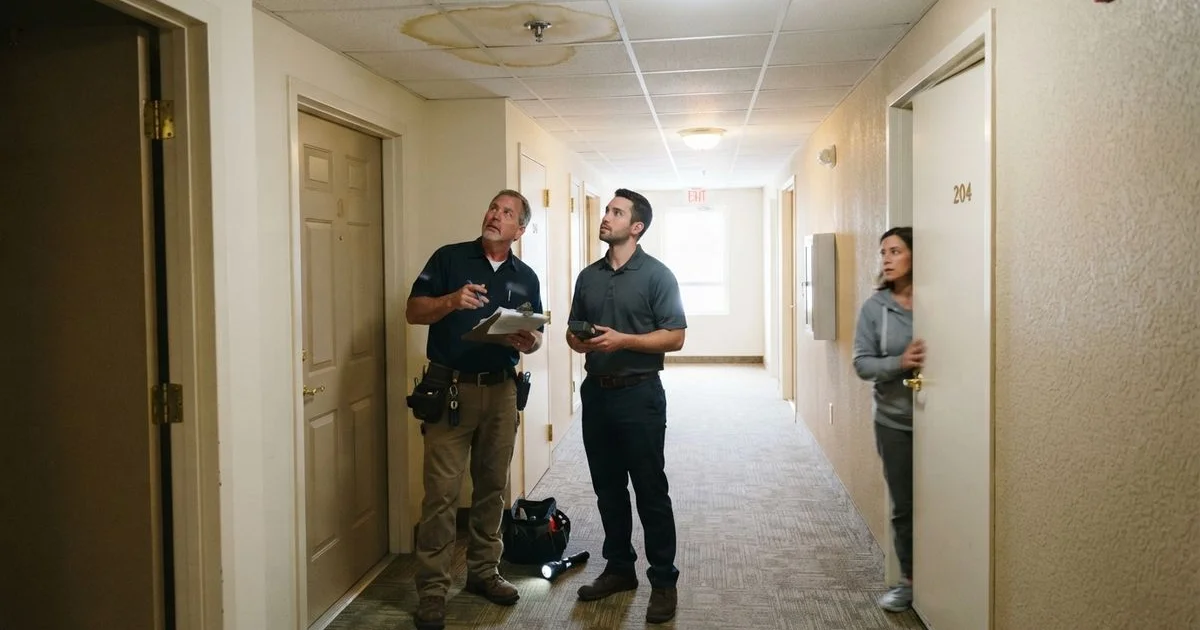
Liability for water damage works differently depending on whether you own a house or a condo unit, and the difference catches a lot of people off guard right when they need clarity most. This is general information, not legal advice; a lawyer or your insurance provider can confirm how these principles apply to your specific situation.
In a detached house
For a standalone house, liability is usually more straightforward: it’s your property, your plumbing, your responsibility, covered by your own home insurance policy. The main complications tend to involve shared boundaries, a fence, a drainage easement, or a shared driveway, where a dispute with a neighbour about the cause of flooding can require more investigation, sometimes involving a surveyor or a lawyer to sort out who’s actually responsible.
In a condo: a more layered situation
Condo liability adds a structural wrinkle: there’s your own unit, the common elements maintained by the condo corporation, and the corporation’s master insurance policy that typically covers the building’s original structure. When water damage crosses from one unit into another, or from a common element into a unit, figuring out who’s liable often depends on exactly where the failure occurred and how your specific condo corporation’s declaration defines unit boundaries.
| Scenario | House | Condo |
|---|---|---|
| Your own plumbing fails | Your insurance | Your insurance, may also involve building policy |
| Damage from a neighbour’s unit | N/A | Source unit’s insurance, often coordinated with building policy |
| Shared structure or common element | N/A | Condo corporation’s master policy |
| Personal belongings | Your insurance | Your own unit owner’s policy |
Why every condo owner needs their own policy
A common misconception is that the condo corporation’s master policy covers everything. It generally doesn’t. It typically covers the building’s structure and common elements, not your personal belongings, your interior finishes and upgrades, or your personal liability if damage originates from your unit and affects a neighbour. A separate unit owner’s policy fills that gap, and going without one is a real financial risk if a leak in your unit ever causes damage next door.
What happens when a neighbour’s leak affects your unit
If water damage in your condo unit comes from another unit, the claims process often starts with the source unit’s insurer, but coordination with the building’s master policy is common depending on where the failure occurred and how your condo’s governing documents define responsibility. This can take longer to resolve than a straightforward house claim, since more than one policy and more than one party are often involved. Document everything independently, photos, a timeline, and your own claim with your insurer, rather than waiting to see how the other unit’s claim resolves.
Reviewing your condo’s governing documents
If you own a condo, it’s worth reading your unit’s declaration and bylaws, or at least knowing where to find them, before you ever need to reference them during a dispute. These documents define where the condo corporation’s responsibility ends and your unit’s begins, and that boundary isn’t always where owners assume it is. Some corporations define plumbing within wall cavities as a common element, others treat it as part of the unit, and that distinction can meaningfully affect a liability conversation.
Getting it right the first time
Whether you’re in a house or a condo, the fastest path to clarity after water damage is documentation and a fast professional response. A restoration company handling the cleanup work can often provide documentation useful for whichever liability conversation follows, timestamps, photos, and a written scope. That documentation matters beyond the immediate claim too; if you sell down the road, the selling a house with water damage history guide covers what needs to be disclosed. Our home page lists vetted local providers, and our ranking method explains how those listings are evaluated.
Liability disputes, especially in condos, can genuinely require legal input beyond what any guide can cover. If a dispute over responsibility isn’t resolving through your insurers directly, a lawyer familiar with condo law in Ontario is worth consulting before positions harden on either side.
Common questions
- If my upstairs condo neighbour causes a leak into my unit, who pays?
- It usually starts with the source unit's insurance and the building's master policy, depending on where exactly the failure occurred and what your condo corporation's bylaws say about unit boundaries. It's common enough that condo insurers are used to handling these claims, but the split can still take some back and forth to sort out.
- Does a condo corporation's insurance cover my personal belongings?
- Generally no. The master policy typically covers the building's common elements and original structure. Your personal belongings and any upgrades you've made inside your unit usually need your own condo insurance policy to be covered.
- In a detached house, who's liable if a shared fence or drainage issue causes flooding?
- This depends on the specific circumstances and property lines, and can genuinely require a professional opinion, sometimes a surveyor or lawyer, especially if a neighbour disputes responsibility. It's not something a homeowner can usually resolve with certainty on their own.
- Should I get my own insurance even though my condo has a master policy?
- Yes. A separate condo unit owner's policy, sometimes called an HO-6 or condo package policy in Ontario, covers what the master policy typically doesn't: your belongings, interior upgrades, and liability for damage that originates from your unit.