Basement flooding in Ontario: what to do in the first 24 hours
By James Silva · Updated 2026-07-17
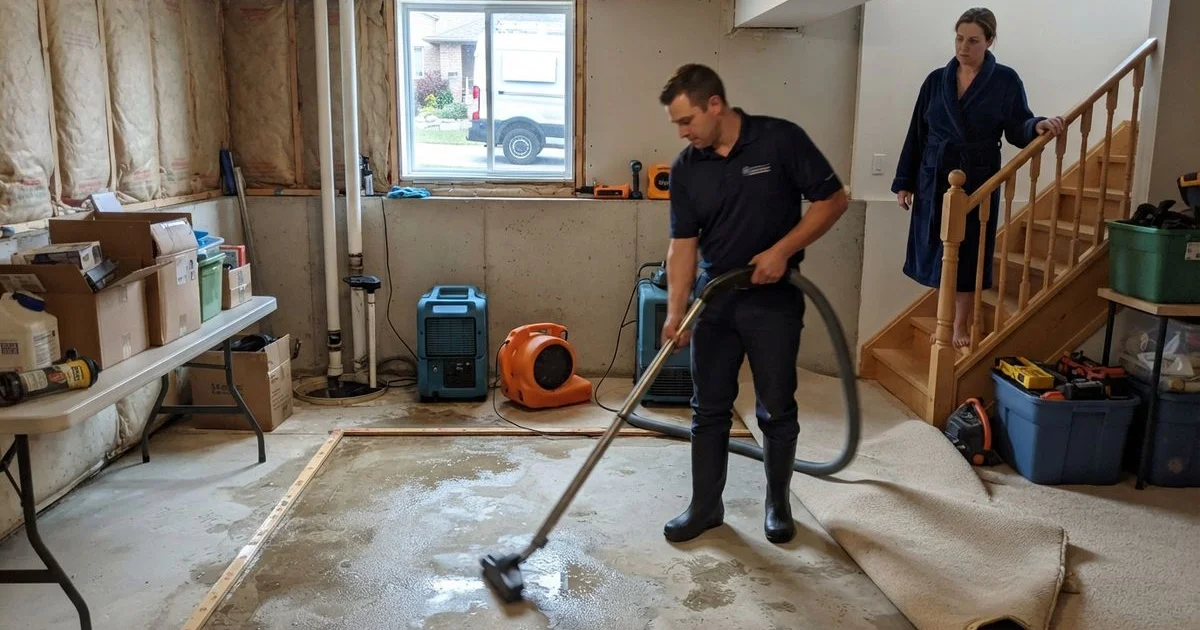
A flooded basement is one of the most common emergencies homeowners in Ontario deal with, especially during spring thaw or a heavy storm. What you do in the first 24 hours has a real effect on both the final restoration cost and whether mold becomes a second problem on top of the flood itself.
First: check for safety hazards
Before anything else, look for electrical hazards. If your breaker panel is in the flooded area, or you’re not sure, don’t enter the water, call an electrician or your utility company first. If the panel is safely accessible, shut off power to the affected area. Also check for gas odors, if you smell gas, leave the house and call your gas provider or emergency services before doing anything else.
Identify the water source, if you can safely
Knowing whether this is a burst pipe, sump pump failure, or storm-driven overland flooding matters for both the cleanup approach and your insurance claim. If it’s a plumbing issue, shut off the main water valve if you can reach it safely. If it’s external flooding, there’s often nothing to shut off, just document conditions as you find them.
Start documenting immediately
Take photos and video of the flooding before you move or remove anything. Insurance claims move faster and more smoothly when you have a clear record of the initial conditions, including water depth, what’s affected, and roughly when it started. Note the time you discovered the flooding, since some policies ask about response timing.
| Time since flooding | Priority action |
|---|---|
| First 30 minutes | Safety check, shut off power/water if safe |
| First 2 hours | Document damage, call a restoration company |
| First 24 hours | Extraction and drying equipment running |
| 24–48 hours | Continued monitoring, mold prevention |
Call for help before you start cleanup yourself
For anything beyond a small amount of clean water, call a restoration company rather than attempting extraction with a shop vac and towels. Basement flooding often involves water that’s traveled further than it looks, into wall cavities and under flooring, and a professional moisture check catches that in a way DIY cleanup can’t. Many companies in this category offer emergency response outside business hours, since standing water gets worse the longer it sits. Once a crew arrives, extraction and drying follow a fairly standard sequence; see the water damage restoration process guide for what to expect visit by visit.
What to do while you wait
If it’s safe, start moving valuables and furniture away from the water, elevating anything you can’t move entirely. Open windows if weather allows, to improve airflow, and avoid running your furnace or air conditioning, which can spread moisture and odor through the house via the ductwork. Don’t use a household vacuum for standing water, it’s not built for it and creates an electrical hazard.
Mistakes that make the first day worse
A few patterns show up again and again in flooded basements. Running the dehumidifier without first extracting standing water wastes time, since the unit is fighting a losing battle against a pool of water it was never meant to handle. Piling wet items into another dry part of the basement to get them out of the way can spread moisture, and sometimes mold spores, into an area that was otherwise fine. And assuming a small, out-of-the-way puddle can wait until tomorrow is how a contained problem turns into a much bigger one by morning, since water spreads sideways under flooring far more than most people expect.
After the water’s out: watch for these signs
Even after extraction, keep an eye on the space for the next week or two. A persistent musty smell, visible discoloration on walls or flooring, or allergy-like symptoms that improve when you leave the house are all signs that moisture or mold is still present somewhere, and worth a follow-up call to whoever handled the flood and water extraction work.
Getting ahead of the next one
Once things are dry, it’s worth asking your restoration company or a contractor about a sump pump backup system or a backwater valve, both common recommendations in Ontario given how often basement flooding ties back to spring thaw or heavy summer storms. Our home page lists vetted local providers if you’re starting that search, and our ranking method explains how those listings are evaluated.
Basement flooding is stressful, but the first 24 hours are mostly about safety, documentation, and speed. Get those three things right and the rest of the restoration process tends to go a lot more smoothly.
Common questions
- Is it safe to go into a flooded basement myself?
- Only if the water is a few centimetres deep, clearly clean, and your electrical panel isn't in or near the flooded area. If water is deep, murky, or there's any chance of electrical hazard, stay out and wait for professional help.
- Should I turn off my electricity before entering?
- If it's safe to reach your breaker panel without stepping through water, yes, turn off power to the affected area. If the panel itself is in the flooded zone, don't attempt it, call an electrician or your utility provider instead.
- How long can I wait before mold becomes a concern?
- Mold can start developing within 24 to 48 hours in a damp, warm basement. That's the practical window for getting water extracted and drying equipment running before it becomes a secondary problem.
- Will my sump pump failure be covered by insurance?
- It depends on your specific policy. Many standard policies exclude sump pump failure unless you've added a specific endorsement for it, which is common enough in Ontario that it's worth checking before you assume you're covered.
Related on this site
- Browse flood & water extraction providers
- What to expect during a water damage restoration visit, step by step
- Black water vs grey water: what the difference means for your health and cleanup
- Fire and smoke damage restoration: what to expect after a house fire
- Burst pipe emergency: what to do before help arrives
- All guides →