What to expect during a water damage restoration visit, step by step
By James Silva · Updated 2026-07-08
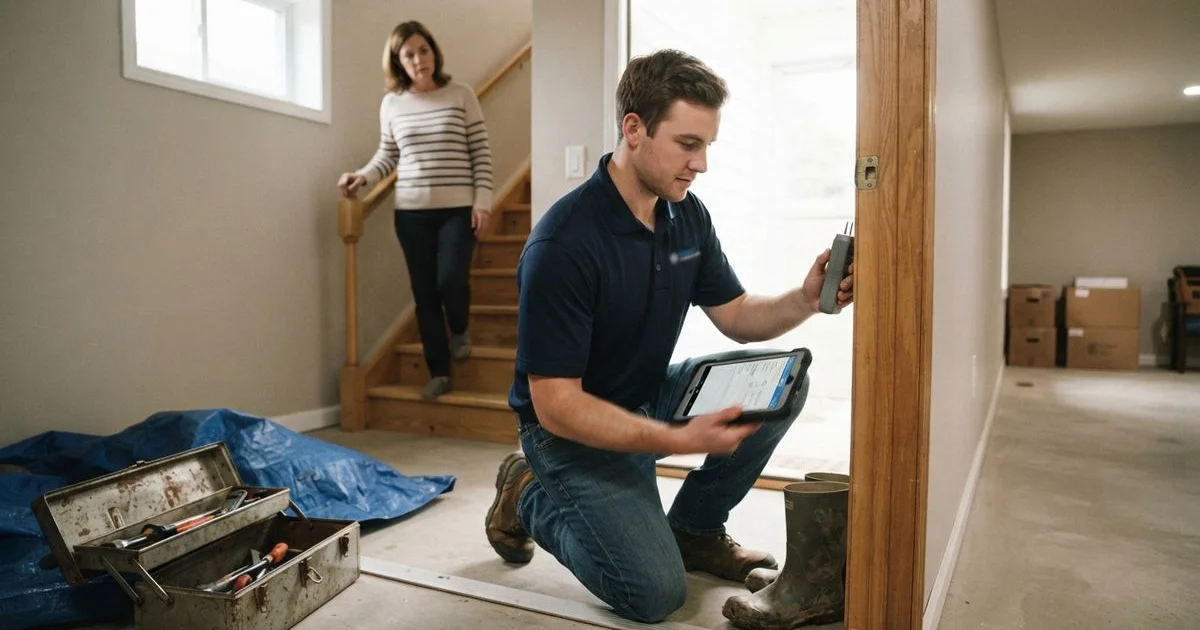
Most people only go through a water damage restoration job once or twice in their life, which makes the whole process feel opaque. Knowing what a competent crew actually does, in order, makes it much easier to tell a thorough job from a rushed one.
Step 1: inspection and moisture mapping
The first thing a technician does is find out how far the water traveled, not just where it’s visible. That means checking behind baseboards, under flooring, and inside wall cavities with a moisture meter, then marking which materials are wet, damp, or dry. This step matters because water that looks contained to one room often wicks further than it appears, and skipping this check is how jobs end up with hidden mold months later.
Step 2: extraction
Standing water gets pumped or vacuumed out first, since drying equipment can’t do its job with pooled water still present. For a flooded basement, this might mean running a truck-mounted extractor for an hour or more before anything else starts. Carpet, if salvageable, gets extracted separately from the padding underneath, which almost never survives a real flood and typically gets removed.
Step 3: removing what can’t be saved
Materials that absorbed too much water, or came into contact with contaminated water, get removed at this stage. That can include carpet underlay, insulation, and sometimes lower sections of drywall. A good crew photographs and documents everything removed, both for your records and for an insurance claim.
Step 4: setting up drying equipment
Air movers and dehumidifiers go in next, positioned to create airflow across wet surfaces rather than just blowing air around the room. Structural drying typically runs three to five days, though that window depends heavily on humidity, how much material got wet, and what it’s made of. This is also where psychrometry, the science of measuring moisture and humidity in the air, guides how the equipment gets adjusted day to day. If you’re comparing flood and water extraction companies, ask how they monitor drying progress, since that’s where the difference between a fast, verified dry-out and a guessing game usually shows up.
Step 5: monitoring and daily checks
A technician should return daily, or close to it, to remeasure moisture levels and adjust equipment. This is the step that separates a properly finished job from one where fans just ran for a set number of days and got picked up. Ask to see the moisture readings each visit, not just get told things look fine.
| Visit stage | What happens | Typical timing |
|---|---|---|
| Inspection | Moisture mapping, source identification | Day 1 |
| Extraction | Standing water removed | Day 1 |
| Demolition | Unsalvageable materials removed | Day 1–2 |
| Drying | Air movers and dehumidifiers running | Day 1–5 |
| Clearance | Final moisture check, equipment removed | Day 3–5 |
Step 6: final clearance
The job isn’t done when the fans get turned off, it’s done when moisture readings in the affected materials match dry standard for that material type. A reputable company gives you a written clearance report with before-and-after readings, not just a verbal confirmation. If repairs are needed, like replacing drywall or flooring, that’s usually a separate phase, sometimes with a different crew.
What good communication looks like along the way
Throughout all of this, you should get a rough timeline up front and updates if it changes. If the crew finds something worse than expected, like mold behind a wall, they should stop, explain it, and get your sign-off on next steps rather than just proceeding and adding it to the bill later. Clear communication and documented moisture readings are the two things that most reliably separate a good restoration experience from a frustrating one.
If you’re just starting to look for a company, our home page lists vetted providers by category, and our ranking method explains how those rankings are built, which is worth a skim before you make a call under pressure.
Common questions
- How long does a restoration crew typically stay on the first visit?
- The initial visit for extraction and setup usually runs one to three hours, depending on how much standing water there is and how many rooms are affected. Drying equipment is then left running and monitored over the following days.
- Do I need to be home while the crew works?
- You need to be present for the initial walkthrough so you can point out affected areas and answer questions about the source of the water. After that, many companies only need brief check-ins to monitor drying equipment, though you can ask to be present for every visit if you prefer.
- Will the crew move my furniture and belongings?
- Yes, moving or elevating furniture off wet flooring is a normal part of the first visit. Anything too damaged to save, like soaked carpet underlay, is usually removed at this stage too, with your sign-off first.
- What happens if mold is found partway through the job?
- A reasonable crew stops and flags it rather than working around it. Mold discovered mid-job usually means a pause to scope additional containment and remediation work, which should be documented and quoted separately before work continues.
Related on this site
- Browse flood & water extraction providers
- Basement flooding in Ontario: what to do in the first 24 hours
- Black water vs grey water: what the difference means for your health and cleanup
- DIY water cleanup vs hiring a professional: when each makes sense
- How long structural drying takes and what affects the timeline
- All guides →